Crypto, How a 2026–2027 Cycle Plan Is Built, From Narratives to Position Sizing
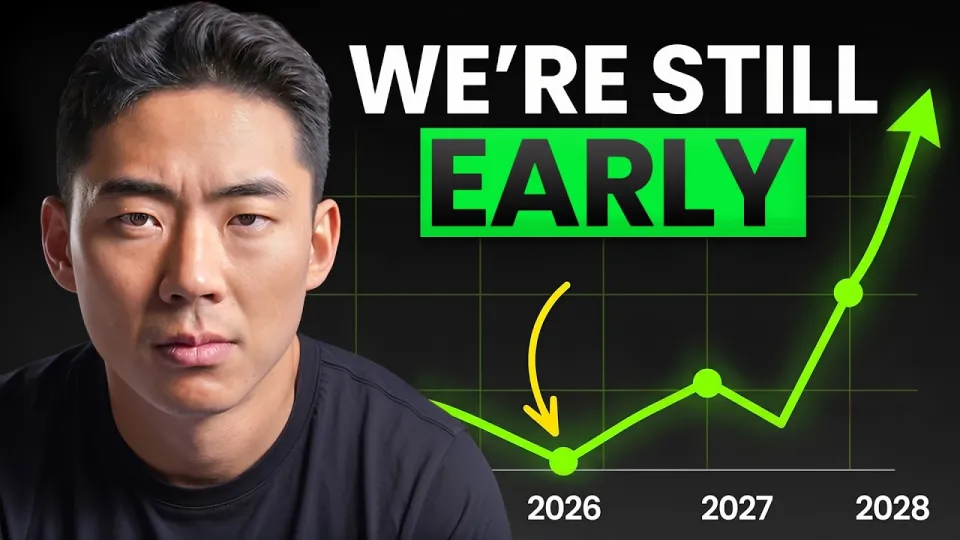
Video: my plan to make millions in crypto 2027
Need articles like this for your video? They help promote it on YouTube and Google — order them in the Telegram bot @sat_sit_bot. It writes articles around your video, embeds the video and publishes them on popular niche websites (no ads). Your first 50 articles are free.
· based on the channel Brian Jung
A crypto plan for the next cycle starts with a written thesis, a fixed split between core holdings and higher-risk narratives, and rules for entries and exits that are set before the market moves. Brian Jung's breakdown of his own approach for the coming cycle follows that structure: a bullish macro case first, then the narratives expected to attract capital, then position sizing — with the Kaizen Pro waitlist at whop.com/kaizen/products/kaizen-pro as the paid research layer behind it.
Why the crypto bull case still holds
The core argument is that crypto is being repriced by institutional access rather than by retail speculation. Spot Bitcoin ETFs turned a niche asset into something a registered investment advisor can allocate to without touching a wallet, and the same wrapper is spreading to Ethereum and, gradually, to baskets of large-cap tokens. Every new approved product widens the pool of capital that can buy without custody risk.
The second leg is regulatory clarity. Stablecoin legislation and market-structure rules move digital assets from an enforcement question into a compliance question, which is exactly the condition most large allocators have been waiting for. One common viewer objection is that clarity means banks will end up controlling crypto. The counterargument in the plan is that regulated rails expand the on-ramp while the underlying networks stay permissionless — the bank becomes a custodian, not the protocol.
A third, quieter driver is supply. Post-halving issuance, staking lockups and ETF holdings that sit in cold storage all reduce the float available to buyers. Thin float plus steady demand is the mechanical reason rallies in this asset class tend to overshoot.
The narratives expected to drive the next cycle
Capital in crypto no longer rotates as one bloc; it rotates sector by sector, and the plan is built around that. The sectors that keep appearing in the thesis:
- Bitcoin as the reserve asset. ETF flows and corporate treasury adoption make BTC the default institutional entry point. It sets the tone for risk appetite across the market.
- Ethereum and its layer-2 ecosystem. Staking yield plus fee revenue give ETH a cash-flow story that most tokens lack, and L2 tokens offer leveraged exposure to the same activity.
- High-throughput layer 1s. SUI is named as an example of a chain with a distinct developer community and consumer-facing apps, the kind of bet that pays off when a chain gets its own cycle of attention.
- Real-revenue applications. Protocols that collect fees from actual users — exchanges, lending markets, infrastructure — instead of relying on emissions. In a market with more tokens than ever, revenue is the filter.
- Tokenized real-world assets. Treasuries and funds on-chain bring yield-seeking capital that does not care about narrative cycles.
The practical implication: instead of waiting for a single "altseason", the plan assumes rotation happens in weeks, and each sector gets sized as its own bet.
How to size positions and structure a crypto portfolio
The framework is deliberately boring, because sizing is what survives a drawdown.
- Split the book. A core allocation in BTC and ETH anchors the portfolio; a smaller, defined portion goes to narrative altcoins. Anything that can go to zero is capped at a percentage the holder can lose without changing their life.
- Size by conviction, not by price. Each idea gets a maximum weight before entry. If a position doubles, the plan says to trim back toward that weight rather than letting one bet dominate.
- Stage entries. Buy in tranches — for example thirds — so a thesis is tested by the market instead of confirmed by a single click.
- Define invalidation in advance. Every position needs a reason to be wrong: a broken thesis, a lost developer ecosystem, a token unlock schedule that overwhelms demand. That is different from a stop loss at a round number.
- Keep dry powder. A cash buffer is what lets you add during the kind of 30–50% corrections that occur even in strong uptrends.
The plan's stated ambition — turning a portfolio into millions — only works mathematically if the base is protected and the winners are allowed to run. That means cutting losers by thesis and letting a small number of positions grow large.
Typical questions and doubts from viewers
A recurring reaction is that every cycle produces the same confident forecasts, and that people who followed the last one lost money. The plan's answer is to separate prediction from process: nobody can forecast the top, but everyone can decide in advance how much they will risk, when they will take profit, and what evidence would make them exit.
Another common doubt is timing. Some viewers argue the real top is years away, in 2029 rather than in the next 12–18 months. That is compatible with the framework — the plan does not require calling a date, only holding positions that survive a longer timeline and trimming into strength.
A third theme is skepticism about permanent bullishness. The honest version of the thesis is conditional: it depends on ETF inflows continuing, on regulation staying constructive, and on on-chain activity growing. If those break, the plan breaks with them. That is why the invalidation rules matter more than the price targets.
Sources and resources from the breakdown
- Kaizen Pro waitlist (paid research and community): https://whop.com/kaizen/products/kaizen-pro/
- Free crypto market report newsletter: https://newsletter.kaizen.gg/subscribe
- Brian Jung on X: https://twitter.com/thebrianjung
- Brian Jung on Instagram: https://www.instagram.com/creditbrian
- Risks and disclaimers document: https://docs.google.com/document/d/1WIgz8SB1mMzke0uvLt_6zXmSbqLL4gL5VgpDnVEk5m8/edit?usp=sharing
The takeaway
A crypto plan for the coming cycle is a set of decisions made in advance: a core of Bitcoin and Ethereum, a capped allocation to narratives such as layer-2 tokens, high-throughput chains and revenue-generating protocols, and rules for trimming and exiting that do not depend on mood. The bullish case rests on ETF access, regulatory clarity and constrained supply, and it fails if those conditions reverse. Brian Jung, the author of the video breakdown this article is based on, frames the goal as protecting the base while letting a few positions compound. Anyone following the same logic can start with the Kaizen Pro waitlist and treat every allocation as risk capital.
Key takeaways
- Brian Jung's breakdown frames the next cycle around three forces: spot ETF inflows, regulatory clarity, and real revenue-generating applications.
- The plan splits a portfolio into a core Bitcoin/Ethereum allocation and a smaller basket of narrative altcoins such as SUI and Ethereum layer-2 tokens.
- Narrative rotation, not a single 'altseason', is the working assumption: capital moves between sectors in weeks, not months.
- Risk rules include position sizing per idea, staged entries, and pre-set invalidation levels rather than round-number stop losses.
- Clarity on stablecoin and market-structure rules is treated as a bullish catalyst, not a threat to crypto's core value proposition.
Source: my plan to make millions in crypto 2027 · Markdown version
Questions & answers
What is the main thesis of this crypto cycle plan?
The thesis is that institutional access through spot ETFs, clearer regulation and constrained token supply are repricing crypto upward. The plan pairs that view with strict position sizing, because the bullish case is conditional on those drivers continuing.
How much of a portfolio should go into altcoins?
There is no universal number, but the framework caps altcoin exposure at a share the holder can lose entirely without affecting their financial life, with Bitcoin and Ethereum as the core. Each narrative bet is sized separately and trimmed back after large gains.
Does regulatory clarity mean banks will control crypto?
Clarity mostly changes who can custody and distribute crypto products, expanding the on-ramp for institutional capital. The underlying networks remain permissionless, so regulated intermediaries add access rather than replacing the protocols.
Is it too late to build a position if the top is years away?
The plan does not depend on calling a cycle top. It uses staged entries, a cash buffer for corrections and invalidation rules, so a longer timeline simply means holding positions that can survive it and trimming into strength.